Short answer: The main advantages of buying property in Oman are freehold title for foreigners inside Integrated Tourism Complexes (ITCs), a residence permit for the owner and family with no Omani sponsor since June 2026, no annual property tax, a currency pegged to the dollar, and entry prices from OMR 61,635. The main disadvantages are that foreigners can buy only in those zones, a one-off registration fee of about 3%, the delivery risk of buying off-plan, a thin resale market, and modest rental returns: in our data a new flat costs 23 to 30 years of comparable Muscat rent. Buy if you plan to stay for years or want the residence route. Rent first if your plans are short or unclear.
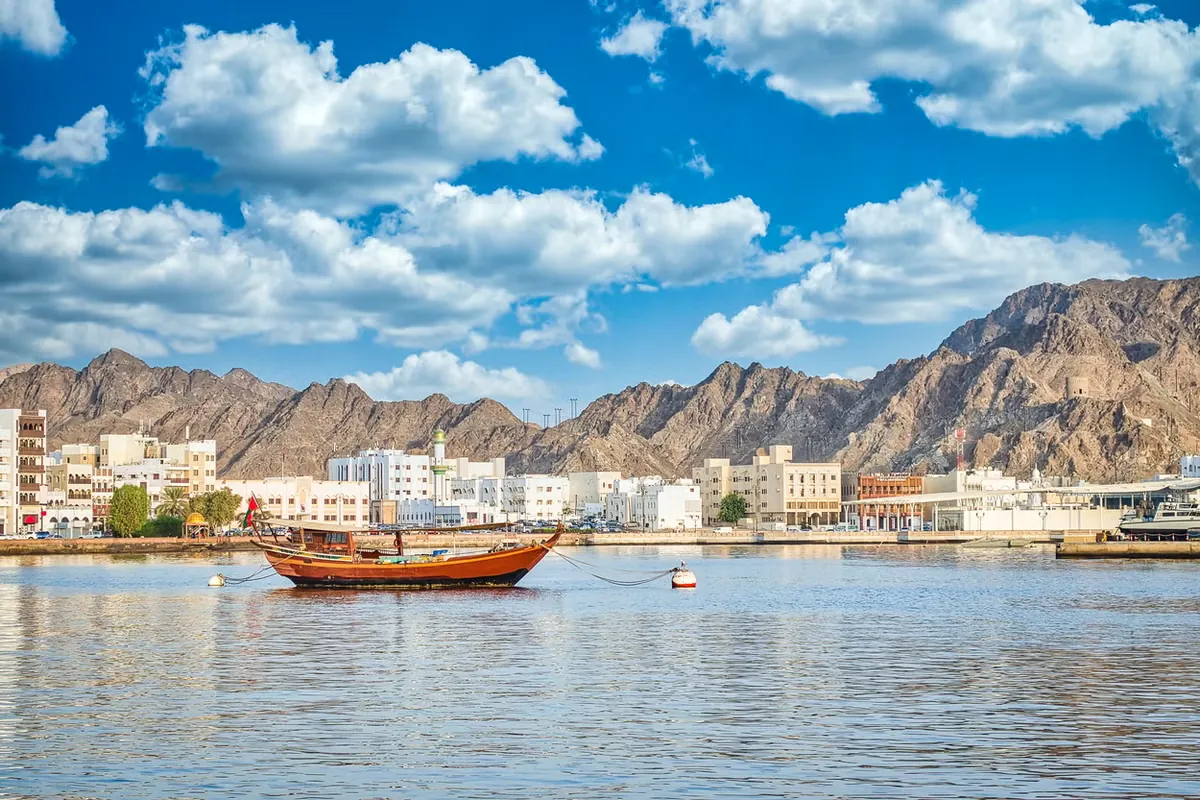
Most articles about buying property in Oman are written to sell it. This one is written by a Muscat agency too, so read it knowing that, but it gives the drawbacks the same space as the benefits. Every figure comes from our live inventory on 7 October 2026, our own guides, or a source listed at the end.
Who this guide is for
This is a decision guide for anyone asking "should I buy in Oman at all?" before "which unit?":
- Foreign residents already in Muscat who rent today and wonder whether to buy instead.
- Buyers abroad who want a second home or a base in the Gulf, often comparing Oman with Dubai.
- Families who want residence that does not depend on an employer.
- Investors who want to know what rent a home in Oman really earns.
If you have already decided and want the legal steps, our guide to the ITC rules for foreign buyers covers the law, fees and process. Omani and GCC citizens can buy almost anywhere; what follows is mostly about non-GCC foreigners.
The advantages of buying property in Oman
Freehold title in your name inside ITCs
Since Royal Decree 12/2006, foreigners of any nationality can own homes and plots inside Integrated Tourism Complexes, planned communities such as Al Mouj, Muscat Bay, Yiti, Jebel Sifah and Hawana Salalah. Ownership can be 100% and the title deed is registered in your own name, so you can sell it, rent it out or leave it to your heirs. The one exception we know of is Musandam, where foreigners in ITCs buy a long usufruct (a right to use) rather than freehold.
The government has also approved zones outside the ITCs, such as Sultan Haitham City in Al Seeb, where many of the lower prices sit: the median in Sultan Haitham City on our price index is OMR 844 per square metre, against OMR 2,199 in Al Mouj.
A residence permit for the owner and family, with no sponsor
A home in an ITC or approved zone makes the owner eligible for a residence permit that also covers the spouse and first-degree relatives. Since 22 June 2026 the owner no longer needs an Omani sponsor. Royal Oman Police Decision 87/2026, published in Official Gazette 1653 on 21 June 2026, lets an eligible owner apply with a certificate of ownership from the competent authority instead. The permit is renewable and lasts as long as you own the home: if you sell it, the residence ends.
There is no minimum price for the owner permit. Separately, Oman's renewable 10-year golden residency, relaunched in August 2025, starts from OMR 200,000 of qualifying investment, and property in an ITC is one of the routes. Approval is not automatic, so check the route at the time you buy. Our owner visa guide and residency by investment guide cover both.
Two limits to keep in mind: the owner permit gives residence, not the right to work for an employer, and neither permit is citizenship.
No annual property tax and low running taxes
Oman charges no annual property tax. Once the title is registered you get no yearly tax bill for owning the home. Individuals pay no capital gains tax when they sell, and residential sales and rents are generally exempt from VAT, although VAT can apply to agency and legal fees.
There is one change to plan for. Under Royal Decree 56/2025, Oman will charge personal income tax of 5% from 1 January 2028, on annual taxable income above OMR 42,000, and rent counts as income. Details are in our guide to property tax in Oman.
Entry prices well below Dubai
The cheapest home we hold today is a 56 m² studio at Wadi Zaha in Sultan Haitham City at OMR 61,635, about USD 160,300 or AED 588,700. In Dubai, the market references on our Oman vs Dubai comparison put a studio in value districts at about AED 650,000 to 800,000.
Live prices on 7 October 2026, cheapest available unit in each project:
| Project | Area | From | Median OMR per m² |
|---|---|---|---|
| Wadi Zaha | Sultan Haitham City | OMR 61,635 | 918 |
| Jebel Sifah | Jebel Sifah ITC | OMR 63,500 | 950 |
| Yenaier | Sultan Haitham City | OMR 67,200 | 769 |
| Aida | Yiti ITC | OMR 85,971 | 1,172 |
| Hawana Salalah | Salalah ITC | OMR 98,000 | 1,178 |
| Zen Residences | Muscat Bay ITC | OMR 138,000 | 1,111 |
| Vistal | Al Mouj ITC | OMR 140,000 | 2,002 |
| St. Regis | Al Mouj ITC | OMR 441,631 | 2,317 |
Across the freehold homes on our Oman property price index, the median is about OMR 1,060 per square metre. Buying costs less too: about 3% once in Oman, against Dubai's 4% transfer fee plus other charges that published breakdowns put at 6% to 8% in all.
Payment plans that spread the cost
Most new homes are sold off-plan on developer instalment plans, in three common shapes:
- Construction-linked: Zen Residences in Muscat Bay sells on 10 / 70 / 20, with the total usually equal to the cash price.
- Fixed instalments: Lubana Island at Hawana Salalah takes 10% down, then 7.5% every quarter for three years.
- Long developer plans: Yenaier in Sultan Haitham City offers ten years.
You do not need the full price on day one. A reservation deposit is typically 5% to 10%, so starting on the OMR 61,635 studio takes roughly OMR 4,931 to 8,013 with the registration fee. Our guides to payment plans and how much money you need to buy give the figures by unit and budget.
A currency pegged to the dollar
The Omani rial has been pegged to the US dollar since 1986, at about OMR 0.3845 per dollar, or about USD 2.60 per rial. For a buyer who earns or saves in dollars, the price does not move with the exchange rate between signing and the last instalment. The other side: Omani interest rates broadly follow US policy.
Quality of life
A single person in Muscat spends about OMR 550 to 700 a month including rent, petrol was 229 baisa a litre in September 2026, and international school fees run about OMR 3,500 to 10,300 a year. The ITCs add what is scarce in the rental market: new buildings, beaches, marinas, golf and managed common areas. Muscat is a quiet city with mountains and sea close by, and a short flight from the UAE. Our cost of living guide has the full budget.
The disadvantages and risks
Foreigners can buy only in ITCs and approved zones
The freedom to own stops at the edge of the zone. Non-GCC foreigners generally cannot buy in the ordinary districts where most expats live, such as Qurum, Al Khuwair, Bausher or Madinat Sultan Qaboos. Land outside the zones, agricultural land and security-sensitive areas are excluded.
There is one narrow exception. Ministerial Decision 357/2020 lets a foreign resident aged 23 or over, with two years in Oman, buy a usufruct of up to 50 years, renewable to 99, on a flat of two or more bedrooms in a building of four or more floors, at sites the ministry has named, for at least OMR 45,000 in Muscat. The flat cannot be resold for four years. It is a right to use, not freehold, and does not by itself give residence.
So you may love a district you cannot buy in, while the homes you can buy sit in newer communities, some far from the centre.
A 3% registration fee, and other costs on top
A foreign buyer pays a one-off registration fee of about 3% of the price when the title is registered with the Ministry of Housing and Urban Planning; Omani buyers have paid 1% since January 2025. On a home of OMR 100,000 that is about OMR 3,000, and you do not get it back when you sell. If you sell within a few years, it can wipe out any gain.
Other costs sit outside the price: legal fees, any developer administration fee, VAT where a developer quotes prices before VAT (several do, including Lubana Island and Zen Residences), and agency or legal services that carry 5% VAT. A long payment plan can cost more than cash: the Yenaier ten-year plan total is 25.4% above the cash price. Treat that as the price of time, and compare the plan total, not the monthly figure.
Off-plan delivery risk, and what escrow does
Most homes we sell are not built yet, so the handover can be late and the finished home can differ from the brochure. Project images in brochures are renderings, not photographs.
Oman has a law for this. Royal Decree 30/2018 on escrow accounts for real estate development projects, with its regulation in Ministerial Decision 72/2019, requires a licensed developer to open a dedicated escrow account at a local bank for each project, and buyers' payments go into it in line with the build programme. Escrow protects where the money goes. It does not guarantee a handover date. Before you pay, ask for:
- The developer's licence and the project's escrow account details, and pay only into that account.
- The contract's handover date, the grace period and what compensation applies if it is late.
- The developer's record on earlier projects, checked separately from the sales brochure.
- In writing, when the title will be registered in your name, because the owner permit follows the title deed.
A thin resale market and slow exits
This is the biggest drawback, and our Oman vs Dubai comparison says so plainly. Oman's market is small, little resale data is published and price discovery is hard. If you need to sell quickly, you may wait months or cut the price. So buy only with money you will not need back in a hurry, and choose a unit someone else will want: popular sizes and good views resell more easily than odd layouts.
Rental yield: what our own rent and price data show
Rent in Oman is modest compared with prices. Our rent vs buy guide compares the cheapest homes we held on 28 September 2026 with asking rents on Bayut on 28 September 2026:
| Home | Price | Comparable asking rent a month | Years of rent to equal price | Gross rent as share of price |
|---|---|---|---|---|
| Studio, Wadi Zaha | OMR 61,635 | OMR 170, Muscat studio median | 30 | About 3.3% |
| One-bedroom, Wadi Zaha | OMR 71,660 | OMR 250, Muscat median | 24 | About 4.2% |
| Two-bedroom, Yenaier | OMR 86,347 | OMR 290, Muscat median | 25 | About 4.0% |
| One-bedroom, Vistal, Al Mouj | OMR 140,000 | OMR 510, Al Mouj median | 23 | About 4.4% |
| Two-bedroom, Vistal, Al Mouj | OMR 235,000 | OMR 664, Savills Al Mouj average | 29.5 | About 3.4% |
That is about 3.3% to 4.4% a year before any cost: an illustration, not a forecast, using asking rents from a market full of older buildings.
Then come the costs. On the Al Mouj one-bedroom, OMR 510 a month is OMR 6,120 a year. Take off a service charge of roughly OMR 300 to 900 a year and you are at about OMR 5,200 to 5,800, before empty months, repairs, furnishing and the 3% lease registration. Rental data inside many ITCs is also thin: on the day of our snapshot, Yiti and Muscat Bay had 2 apartments for rent on Bayut between them.
Service charges
Managed communities charge an annual fee for security, landscaping and shared facilities, set by the developer or owners association; it differs by project and can rise. Our ITC guide gives a rough range of OMR 4 to 12 per square metre a year, which is about OMR 300 to 900 on a 76 m² one-bedroom. Ask for the current figure for your unit, and its history if the community is built.
Mortgage access for non-residents
You can borrow, but on tighter terms than at home. Our mortgage guide sets out what banks typically offer:
- Resident expats: up to about 80% of the value, usually with salary transferred to the lending bank.
- Non-residents: roughly 50% to 70%, with stricter checks on income earned abroad.
- Term: up to 20 to 25 years, ending before retirement age, usually 60 to 65.
- Limits: the Central Bank of Oman caps total repayments at about 60% of net salary when a housing loan is included, and every applicant is checked through Mala'a, the national credit bureau.
Terms vary by bank and change with rates, so if you need a high loan, get it confirmed by two banks before you reserve. On an off-plan home, also ask the bank at what stage it will release the money.
Summer heat
The 1991 to 2020 averages at Muscat airport put the daily high at about 39°C to 40°C in May and June, and still about 36°C in August and September, against about 25°C in January. Rain is rare, about 73 mm a year. That means air conditioning for much of the year, higher summer power bills (an 85 m² flat averages about OMR 66 a month in utilities) and outdoor life that is best in the cooler months. Salalah is the exception: the khareef monsoon brings mist and rain there in summer.
Distance from the city for some ITCs
Some freehold zones sit well away from central Muscat. From the centre of Qurum, off-peak, Muscat Bay is about 19 km and 22 minutes by road, Yiti about 23 km and 28 minutes, and Al Mouj about 29 km and 24 minutes. Sultan Haitham City, where the lowest prices are, is about 44 km from Qurum in a straight line, though only about 23 km from the airport.
Sultan Haitham City is also still being built: it was launched in May 2023 on about 14.8 km² for about 100,000 future residents, so shops, schools and services arrive in phases. Jebel Sifah lies on the coast beyond Yiti, and Hawana Salalah is in Dhofar, a flight from Muscat. Drive the route at rush hour before you buy, especially if you will commute.
Pros and cons at a glance
| Advantage | Disadvantage |
|---|---|
| Freehold title in your name inside ITCs and approved zones | Only those zones; most central districts are closed to foreign buyers |
| Owner residence permit for the family, no sponsor since June 2026 | Permit ends when you sell; it is not a work permit or citizenship |
| No annual property tax, no capital gains tax for individuals | About 3% registration once; income tax on large rental incomes from 2028 |
| Entry from OMR 61,635, below Dubai's studio range | Lower prices sit in new zones far from the centre |
| Developer plans from 10% down | Long plans cost more: 25.4% above cash at Yenaier |
| Escrow law for off-plan payments | Handover dates are not guaranteed |
| Rial pegged to the dollar since 1986 | Rates follow US policy |
| New homes in planned, managed communities | Annual service charges, set by the developer |
| Quiet, safe city life by the sea | Long hot summer; thin resale and rental markets |
Who should buy, and who should rent first
Buying makes more sense if:
- You plan to stay in Oman, or to keep the home, for many years.
- Your income does not come from an Omani employer: you are retired, run a business or work remotely, and want residence that no employer controls.
- You want a home of a kind that is rare in the rental market, new and in a community with a beach, marina or golf course.
- You can pay without stretching, and will not need the money back quickly.
Renting first makes more sense if:
- You expect to stay less than about five years, or your job could move you.
- You want to live in Qurum, Al Khuwair or Madinat Sultan Qaboos, which foreign buyers generally cannot buy into.
- Your residence already comes with your job and you want your capital free.
- Your main goal is rental income: at about 3.3% to 4.4% gross before costs, other investments may serve you better.
Many families do both: rent for a year, learn the city, then buy in the community that suits them. On Bayut on 28 September 2026, a one-bedroom asked a median of OMR 250 a month across Muscat, and OMR 275 to 425 in Qurum. Our rent vs buy guide compares renting and buying area by area.
How to reduce the risks: a checklist
- Decide your reason first. Residence, a holiday home and rental income lead to different units.
- Check the zone. Confirm the project is an ITC or an approved zone and that a foreigner can register the title.
- Check the developer and the escrow. Pay only into the project's escrow account.
- Read the dates. Note the handover date, the grace period, late-delivery terms and when the title is registered.
- Price the whole cost. Add the 3% fee, VAT if quoted before VAT, legal fees and the service charge, and compare the plan total with the cash price.
- Test the rent yourself. Use asking rents in the same community, not the city average.
- Plan the exit. Assume a sale could take months.
- Check residence at the time. Visa rules change by decision; confirm the owner permit and any golden residency route before you sign.
- Get the loan in writing from at least two banks before you reserve.
- Visit in summer and at rush hour. See the community and the drive at their worst before you commit.
The purchase itself usually takes one to three months and can be done remotely with a power of attorney. Our buy page lists the projects, and our unit search shows every available home with its price.
FAQ
Is buying property in Oman a good idea in 2026?
It depends on your plans. It suits buyers who will stay for years, want sponsor-free residence for their family, or want a new home in a managed community, with no annual property tax and entry from OMR 61,635. It suits short stays and pure rental investors less well, because resale is slow and gross rent in our data is about 3.3% to 4.4% of the price before costs.
What are the main disadvantages of buying property in Oman?
Five stand out. Foreigners can buy only in ITCs and approved zones. You pay a one-off registration fee of about 3%. Most homes are off-plan, so handover can be late. The resale market is thin, so selling can take months. And rents are modest against prices, at 23 to 30 years of rent in our comparison, with service charges on top.
Can foreigners own property in Oman outright?
Yes, inside Integrated Tourism Complexes, where any nationality can hold freehold title in their own name under Royal Decree 12/2006, and in approved zones such as Sultan Haitham City. Musandam is an exception, with usufruct only. Outside the zones, a foreign resident can at most buy a usufruct of up to 50 years at sites named under Ministerial Decision 357/2020.
Does buying property in Oman give residency?
Yes. A home in an ITC or approved zone makes the owner, spouse and first-degree relatives eligible for a renewable residence permit, and since 22 June 2026 no Omani sponsor is needed. The permit ends if you sell. The 10-year golden residency starts from OMR 200,000 of qualifying investment. Neither permit is citizenship, and approval is not automatic.
What rental yield can I expect in Oman?
In our comparison of the cheapest homes we held on 28 September 2026 with Bayut asking rents on the same day, a year's rent came to about 3.3% to 4.4% of the price before costs. After service charges, empty months and repairs it is lower. Treat any yield above that with care unless it comes with real rent data for the same building.
Are there hidden costs when buying property in Oman?
They are not hidden, but they are easy to miss: the 3% registration fee, VAT where prices are quoted before VAT, legal fees, the annual service charge, utilities and, if you let the home, the 3% lease registration fee. A long developer plan can also cost more than cash, 25.4% more at Yenaier.
Sources
- Royal Decree 12/2006 on real estate ownership in integrated tourism complexes, as summarised by Al Tamimi & Company, Foreign ownership of real estate in Oman; Times of Oman, legal framework governing foreign ownership in Oman's ITCs.
- Ministerial Decision 357/2020 on usufruct for non-Omanis, Official Gazette 1362, 18 October 2020.
- Oman Observer, Oman updates property-linked visas and residency rules for foreign investors, June 2026; Muscat Daily, Oman eases residency rules for foreign property owners, 21 June 2026.
- Gulf News, Oman officially launches 10-year golden visa, August 2025.
- EY, Oman to introduce personal income tax from January 2028, July 2025.
- Lexis Middle East, Oman revamps real estate fees, 30 January 2025.
- Royal Decree 30/2018 on escrow accounts for real estate development projects; Trowers & Hamlins, escrow laws in the Sultanate of Oman, June 2023.
- Gulf News, Oman says committed to currency peg.
- Wikipedia, Muscat, climate table, 1991 to 2020 normals at Muscat International Airport.
- Bayut Oman, apartments for rent in Muscat, all monthly listings read on 28 September 2026; Savills, Oman Property Market Report, 2026, as used in our rent vs buy guide.
- OSRM routing on OpenStreetMap data, read 6 October 2026.
- Irfan Investment Group live inventory, read 7 October 2026, and our Oman property price index, updated 6 October 2026.
Next step
If you are weighing whether to buy in Oman at all, tell our Muscat team your budget, how long you plan to stay and whether residence or rent matters more to you, and an advisor will reply within one business day with an honest view on buying or renting first, and the homes that fit if buying makes sense.