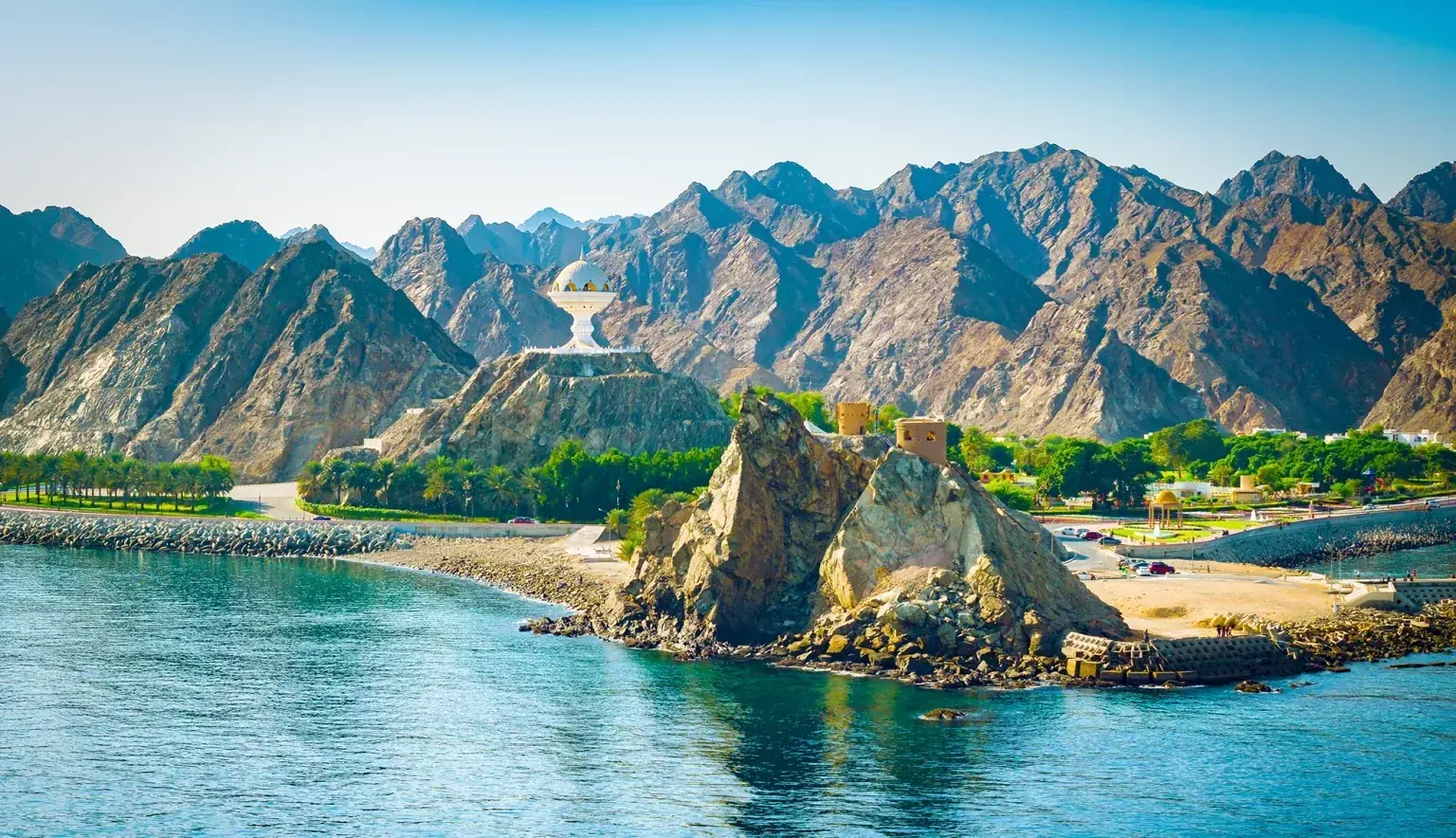
Short answer: Oman is the cheaper entry and the cheaper transaction: a freehold home starts at OMR 61,635 (about AED 588,700), closing costs are a one-time 3%, and any purchase inside an Integrated Tourism Complex makes the owner and immediate family eligible for renewable residency. Dubai is the deeper market: far more transactions and a real resale and rental market, while Oman's golden visa threshold of OMR 200,000 (about AED 1.91 million) now sits slightly below Dubai's AED 2 million. Buy in Oman for entry price and residency at a small ticket. Buy in Dubai for liquidity.
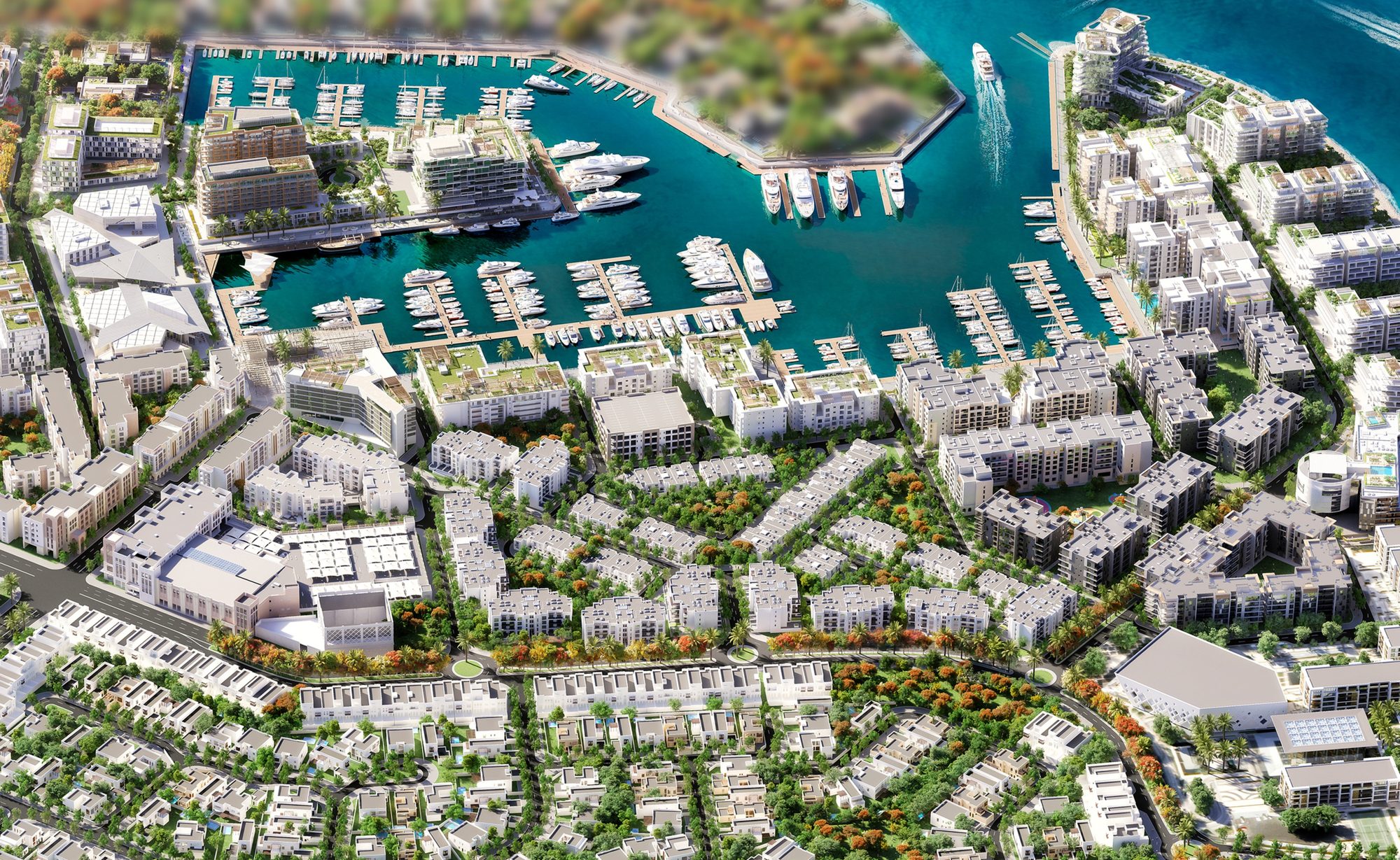
Almost every comparison of these two markets is written by somebody selling one of them. This one is written by a brokerage in Muscat, so read the Dubai side knowing that, and check the numbers: the Oman figures come from our own live inventory of 452 units and the Dubai figures are market references we have labelled as such.
Side by side, August 2026
| Oman | Dubai | |
|---|---|---|
| Entry price, freehold | OMR 61,635, about AED 588,700 | about AED 650,000 to 800,000 for a studio in value districts |
| Median price per m² | about OMR 1,063, roughly AED 10,150, across our live stock | about AED 21,200, mid-2026 apartment average |
| Transaction cost | one-time 3% registration | 4% DLD transfer fee plus registration and title deed, commonly 6% to 8% all in |
| Ownership for foreigners | 100% freehold inside ITC zones, any nationality, Royal Decree 12/2006 | 100% freehold inside designated freehold zones |
| Residency from any purchase | yes, renewable owner permit for owner and immediate family | no, there is no property residency route below the golden visa threshold |
| Golden residency threshold | OMR 200,000 for 10 years, renewable, about AED 1.91m | AED 2m for 10 years |
| Annual property tax | none | none |
| Tax on rental income, individuals | none | none |
| Market depth | thin, few transactions | deep, the busiest market in the region |
The Dubai figures are market references, not our data: the AED 2m federal golden visa threshold, the 4% Dubai Land Department transfer fee, and a mid-2026 apartment average of about AED 1,969 per square foot. Check them against a Dubai source before you act on them.
What the same budget buys
Take AED 600,000, which in Dubai is roughly the floor for a studio in a value district.
In Oman that same money buys a 56 m² freehold studio at Sultan Haitham City with a registered title deed, and the purchase makes you and your immediate family eligible for a renewable residency permit. Across our live inventory, 146 of 452 available homes sit under about AED 955,000.
At the other end, our stock runs to a 1,086 m² penthouse at Yiti. The point is not that Oman is cheap. It is that the entry rung is lower and the ladder is shorter.

The fees nobody puts in the headline
This is where the gap is wider than most buyers expect.
In Oman you pay a one-time registration fee of about 3% of the purchase price. After that there is no annual property tax, no capital gains tax, and no tax on rental income for individuals.
In Dubai the headline is the 4% Dubai Land Department transfer fee. In market practice the buyer pays all of it, even though it is formally split with the seller. On top sit a registration fee, a title deed fee, and agency commission, and published breakdowns commonly put the total between 6% and 8% of the price.
On a purchase of about AED 600,000 that difference is roughly AED 20,000 to AED 30,000 at signing, before anybody has moved in.
Residency, where the two markets really diverge
Dubai's property route to residency starts at AED 2 million of certified property value. Below that, buying property does not by itself give you a residency permit.
Oman works the other way round. Any purchase inside an ITC zone makes the owner and immediate family eligible for a renewable property owner permit, and that starts at about AED 588,700. Oman also has a golden residency, renewable for ten years from OMR 200,000, and at about AED 1.91 million it is now slightly lower than the UAE's AED 2 million.
So if a golden visa is the goal and the budget is around AED 2 million, Oman is now slightly cheaper, although in Oman price alone does not approve an application. If a second residency at a small ticket is the goal, Oman has a route the UAE does not.
Where Dubai genuinely wins
We would rather say this than have you discover it later.
Liquidity. Dubai records more transactions in a week than Oman does in a long stretch. If you may need to sell in a hurry, that difference is the whole argument, and it favours Dubai heavily.
Rental demand. Dubai has a deep, year-round tenant market with published data on almost every building. Oman's rental market is thinner and far less documented, so any income projection carries more uncertainty. We do not publish yield figures for that reason.
Scale and choice. Thousands of buildings against our 12 projects. If you want a specific tower, floor and view, Dubai will have it.
Who should choose which
Choose Oman if the entry price matters, if you want residency for the family at a purchase well under AED 1 million, if you want lower closing costs, or if you want a second base a short flight from the UAE without Dubai pricing.
Choose Dubai if liquidity matters most, if you need a documented rental market, if you want the widest possible choice, or if your budget is near AED 2 million and you want the ten-year golden visa in the deeper market.
Plenty of buyers in the Gulf end up with both, and that is a reasonable answer too.
FAQ
Is property cheaper in Oman or Dubai?
Oman, on both measures we can check. Our entry price is OMR 61,635, about AED 588,700, against roughly AED 650,000 to 800,000 for a studio in Dubai's value districts, and our live median is about AED 10,150 per square metre against a mid-2026 Dubai apartment average near AED 21,200.
Which country has lower buying fees?
Oman. A one-time registration fee of about 3% against Dubai's 4% transfer fee plus registration, title deed and commission, which published breakdowns commonly total at 6% to 8%.
Can foreigners own freehold property in both?
Yes, in both, but only inside defined zones: Integrated Tourism Complexes in Oman under Royal Decree 12/2006, and designated freehold areas in Dubai.
Which gives residency more easily?
Oman, at a small ticket. Any ITC purchase makes the owner and immediate family eligible for a renewable permit from about AED 588,700. Dubai's property route to residency starts at AED 2 million, slightly above Oman's own golden residency threshold of OMR 200,000, about AED 1.91 million.
What is the main risk of buying in Oman instead of Dubai?
Liquidity. Oman's resale market is thin and far less documented, so selling can take longer and price discovery is harder. If you may need to exit quickly, that is a real argument for Dubai.