Short answer: Al Khoud (الخوض, also spelt Al Khoudh or Al Khod) is an inland district of Wilayat As Seeb in Muscat, running from its souq south past the university to the old village at the foot of the hills. It is home to Sultan Qaboos University, the University Medical City hospitals, Al Khoud souq, Oman's first groundwater recharge dam and the new Oman Botanic Garden. On our Bayut snapshot of 28 September 2026, a one-bedroom apartment in Al Khoud typically asks OMR 150 to 230 a month and a two-bedroom OMR 180 to 250. Non-GCC foreigners cannot buy freehold here, though a 2020 usufruct scheme covers flats in Al Khoud phase 2. Freehold is open to them about 10 km from the university in Al Mouj, from OMR 140,000 in our listings, and about 11 km away in Sultan Haitham City, from OMR 61,635.
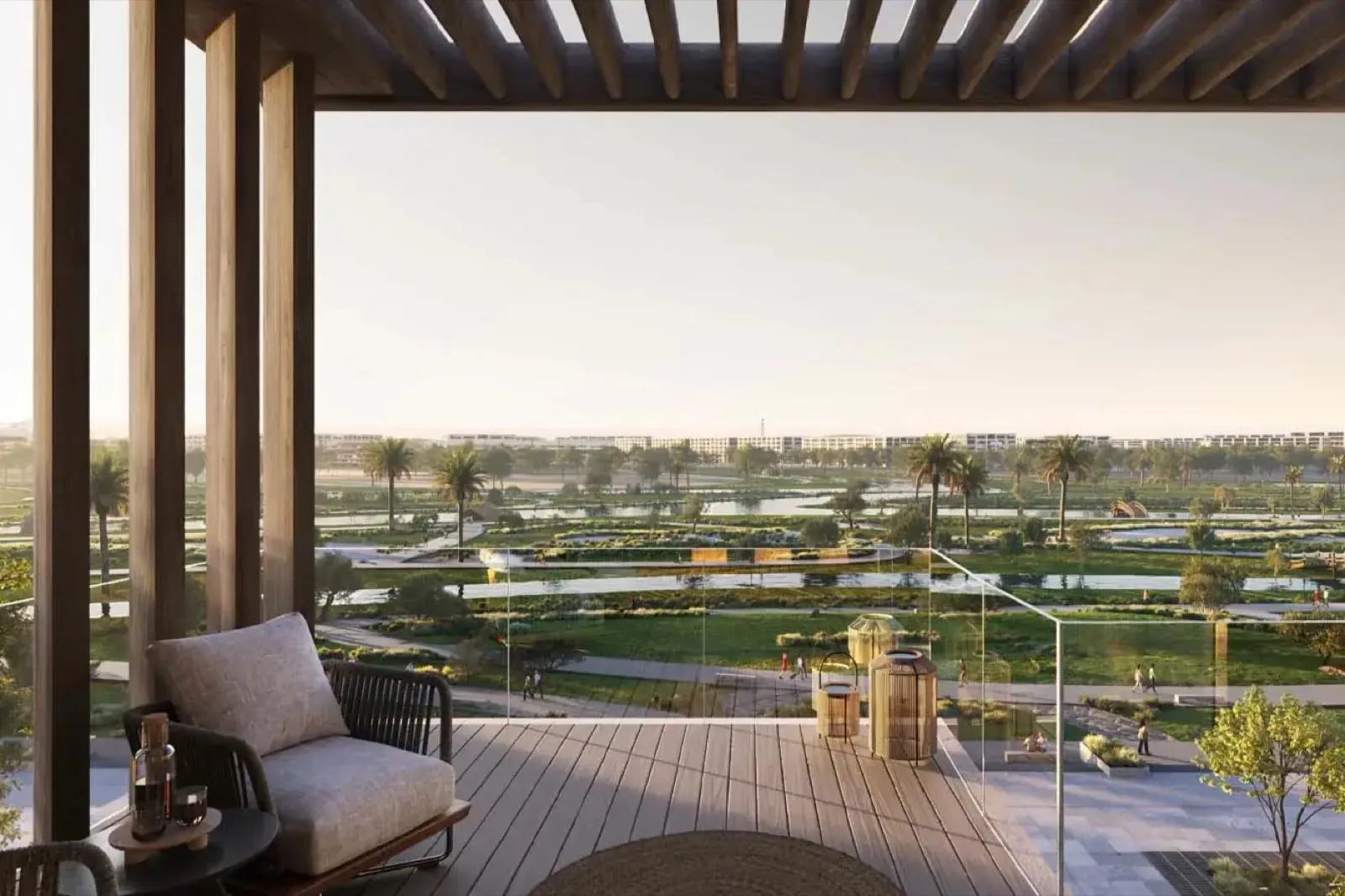
Most people know Al Khoud for the university, the souq or the wadi. All three sit within a few kilometres of each other, and together they make Al Khoud quite unlike the beach districts of Seeb.
Our Al Seeb area guide covers the whole wilayat. This one stays in Al Khoud: the old village, the dams, the souq, the university and hospitals, then asking rents by bedroom from every Bayut listing on 28 September 2026, who may buy here, and live prices in the two freehold zones nearby on 3 October 2026.
Where Al Khoud is and what it includes
Al Khoud is part of Wilayat As Seeb, the most populous wilayat of Muscat Governorate. The district runs from the souq streets in the north, past Sultan Qaboos University, to the old village in the south, where the lower course of Wadi Samail, known locally as Wadi Al Khoud, comes out of the hills. Al Khoud Street is its spine.
Neighbours. On OpenStreetMap, Al Hail South and Al Mawaleh South lie to the east, between Al Khoud and the airport. Al Maabilah South lies to the north-west, and Sultan Haitham City is beyond it.
The numbered areas. Official news calls Al Khoud 7 (الخوض السابعة) a residential area and Al Khoud 6 a commercial area, and Al Watan reports a mosque in Al Khoud Al Jadida (New Al Khoud). We found no official map of every number, so we describe only these.
| Part of Al Khoud | What it is | Who it suits |
|---|---|---|
| University district | Sultan Qaboos University campus, SQU Hospital and the cancer care centre, now under the University Medical City | Students, academics, medical staff |
| Al Khoud 6 | Commercial area by the university road, being rehabilitated by the municipality | Renters who want shops and cafes on foot |
| Al Khoud 7 | Residential area with a new neighbourhood park | Families who want to live near the university |
| Al Khoud souq area | Shopping streets in the north of the district, with metered car parks | Everyday shopping, gold, clothes and perfume |
| Old Al Khoud village | Farms, falaj channels, the wadi, the fort and the Oman Botanic Garden | Weekend visitors more than tenants |
Population. NCSI counts by wilayat: Seeb had 594,155 residents in 2025. There is no official figure for Al Khoud alone. One directory quotes 39,704 from a "2015 census", but Oman's censuses were in 2010 and 2020, so we have not used it.
Old Al Khoud village, the wadi and the forts
Old Al Khoud (الخوض القديمة) is a farming village at a bottleneck where wadis from the Samail side converge, as Oman Daily put it in 2017, with water for much of the year. The Oman Observer says the water travels about 10 km from Samail and Fanja to reach it.
Forts and old houses. The main monument is Al Khoud Fort, which Oman Daily also calls Qalat Al Faras, on the bank of the wadi. The Observer places Al Khoud Castle on the eastern bank. Nearby is Bait Al Oud, a two-storey fortified house with rooms for storing dates and honey. The sources disagree on its age: Oman Daily dates it to around 1880, while the Observer says it is about 200 years old.
The falaj. Oman Daily names two aflaj, Falaj Al Sirah and Falaj Bu Biaha, the second running stronger because of its higher source. The village has long grown dates, including Khalas and Khunaizi palms, and today also grows potatoes, garlic, lemons and wheat.
Dinosaurs. A 2015 paper in PLOS ONE described hadrosauroid bones from the Al Khod Conglomerate, about 3 km south-east of the village, as the first evidence of these dinosaurs from Afro-Arabia; the fossils are held by Sultan Qaboos University.
Oman Botanic Garden. The garden is in Al Khoud, and the Ministry of Heritage and Tourism handed it over to Muscat Municipality in December 2025. Muscat Daily gives it 500 hectares and about 1,450 native species, with two indoor biomes for Oman's northern and southern mountains; earlier reports said 425 hectares. A new 1.4 km dual carriageway on Al Khoud Village Road leads to it. No public opening date had been announced when we checked.
The wadi is popular for off-roading and mountain biking. It floods after heavy rain, so keep out of the wadi bed when rain is forecast.
Al Khoud dam and the new flood dams
Two different projects answer to "سد الخوض" (Al Khoud dam).
The existing recharge dam. Built between December 1983 and March 1985, the Al Khoud dam was the first groundwater recharge dam in Oman. It holds flood water so that it soaks into the aquifer. A 2020 study in Scientific Reports gives it a length of 5,100 m, a maximum height of 11 m and a storage capacity of 11.6 million m³. Oman Daily gives about 7 km for the length, so treat it as approximate.
The new flood-protection dams. In November 2024, the Ministry of Agriculture, Fisheries and Water Resources told Oman Daily about a three-dam flood protection system for Wadi Al Khoud. Its main dam, coded AK01, would stand above Al Khoud village: 1,600 m long, up to 58 m high, with about 77 million m³ of storage. It is meant to protect the wadi's course down to the Seeb coast from a flood on the scale of Cyclone Gonu in 2007. The Islamic Development Bank is financing it; the tender closed on 9 August 2026, and Zawya expects an award in the fourth quarter of 2026 and completion in the third quarter of 2030.
If you rent or buy, ask how the street coped in past heavy rain.
Al Khoud souq and daily shopping
Al Khoud souq (سوق الخوض) is a modern shopping district, with streets of shops and car parks, rather than an old covered market. On OpenStreetMap it sits around Al Barakat Street, between Al Khoud Street and Al Shabab Street.
What it sells. Sakan's 2024 guide lists traditional and embroidered clothing, shoes and bags, gold and silver jewellery, perfumes and oils, home decor and sweets, plus chain stores such as Red Tag, with cafes and restaurants around it.
Parking and busy hours. Muscat Municipality made the new car parks at Al Khoud souq, and those behind the Ooredoo building, paid parking from 1 January 2023. Under its 2022 rules, meters run 8am to 1pm and 4pm to 9pm, with Fridays, Saturdays and public holidays free. We found no reliable published opening hours or busy times for the souq itself.
Al Khoud 6 makeover. In December 2024 the municipality announced a rehabilitation of the Al Khoud 6 commercial area: 38,000 m² of walkways, 26,000 m² of paved parking, 58 benches, trees and an irrigation system.
Hypermarkets and malls. Lulu Hypermarket at Wadi Al Lawami, Al Khoud, opened on 2 January 2019 with about 350,000 sq ft of space, a food court and a department store. City Centre Muscat and Markaz Al Bahja are in neighbouring Al Mawaleh, about 7 km away in a straight line.
Sultan Qaboos University, the hospitals and schools
Sultan Qaboos University (SQU). Oman's first government university took its first students in 1986 and gives its address as Al Jame'a Street, Al Khoud. Its nine colleges and about 15,000 students explain many of the district's small flats.
University Medical City. A Royal Decree of 7 February 2024 created the University Medical City and moved three institutions into it:
- Sultan Qaboos University Hospital, a 700-bed teaching hospital that opened in 1990.
- The Sultan Qaboos Comprehensive Cancer Care and Research Centre, on SQU Street in Al Khoud.
- The National Centre for Haematology and Bone Marrow Transplantation.
Schools. Oman Daily names Al Muthanna bin Haritha School for boys and Jamila bint Thabit School for girls in the village area. The nearest international schools are The Sultan's School in Al Hail South, and Cheltenham Muscat and Downe House Muscat in Al Bandar towards the airport; our international schools page lists curricula and fees.
Mosques and parks. The Sheikh Mohammed bin Omair Al Hinai Mosque in Al Khoud Al Jadida opened in June 2014 and holds more than 1,500 men and about 350 women. Al Khoud Park, near the commercial streets, covers about 15,000 m², with a 1 km walking track, a five-a-side pitch and a playground. Al Khoud 7 is getting a smaller park of its own.
Getting around: roads, buses and drive times
- Roads. Al Khoud Street links the souq area, the university and the Muscat Expressway; its 6 km southern stretch, from the SQU roundabout to expressway junction 12, has had three lanes each way since 2017. Mazoon Street leads east towards Al Mawaleh and the airport. A 2022 contract doubles the 3.5 km university road from SQU Gate 2 to the Al Khoud 6 roundabout.
- Buses. Mwasalat runs route 6 (Al Khoud to Sultan Qaboos University and back) and route 7 (Al Maabilah to Al Khoud to Burj Al Sahwa). Both were suspended for a few days in March 2026 as a precaution, so check before you rely on them.
- Drive times. Measured with OSRM routing on OpenStreetMap on 3 October 2026, off-peak. Add time at rush hour.
| From | To | By road | Off-peak drive |
|---|---|---|---|
| SQU | Muscat International Airport | About 19 km | About 25 minutes |
| Al Khoud souq | Muscat International Airport | About 16 km | About 15 minutes |
| SQU | Sultan Haitham City (Hay Al Wafa site) | About 16.5 km | About 20 minutes |
| Al Khoud souq | Sultan Haitham City (Hay Al Wafa site) | About 15 km | About 15 minutes |
| SQU | Al Mouj (Vistal site) | About 15.5 km | About 20 minutes |
| Al Khoud souq | Al Mouj (Vistal site) | About 10 km | About 10 minutes |
| Old Al Khoud village | SQU | About 8 km | About 13 minutes |
Apartments and villas for rent in Al Khoud
These are asking rents from our snapshot of every monthly Bayut Oman rental listing in Muscat on 28 September 2026: opening prices, not signed contracts, furnished and unfurnished mixed. We show the middle half of listings (25th to 75th percentile) in OMR a month, with the number of listings (n), and no range where fewer than 10 were listed. Bayut files all of Al Khoud under one name, so the numbered areas cannot be split.
| Home | Al Khoud | All Seeb outside Al Mouj | Al Mouj (The Wave) |
|---|---|---|---|
| One-bedroom apartment | 150 to 230 (n 13) | 110 to 220 (n 56) | 480 to 600 (n 29) |
| Two-bedroom apartment | 180 to 250 (n 25) | 180 to 280 (n 90) | 800 to 1,300 (n 40) |
| Three-bedroom apartment | Too few (n 7) | 165 to 250 (n 37) | 1,100 to 1,800 (n 13) |
| Four-bedroom villa | 500 to 580 (n 10) | 500 to 650 (n 61) | Too few |
| Five-bedroom villa | 490 to 600 (n 12) | 485 to 700 (n 48) | Too few |
"All Seeb outside Al Mouj" is the same grouping as in our Seeb guide. What stands out:
- One-bedrooms ask more than elsewhere in Seeb. The Al Khoud median is OMR 210, against OMR 148 across Seeb and about OMR 250 across Muscat. The sample is small (13 homes, 3 furnished), and the university and hospitals are the likely reason.
- Two-bedrooms match Seeb, at a median of OMR 210 for about 100 m².
- Villas are a little cheaper. A four-bedroom asks a median of OMR 540, against OMR 620 across Seeb. Al Khoud had 34 villas listed and 45 apartments.
On top of the rent, a Muscat lease is registered with the municipality for 3% of the contract's rent, and you pay electricity and water yourself. Our rent vs buy guide compares these rents with buying across Muscat.
Buying in Al Khoud: who can own, and freehold nearby
Omanis and GCC citizens can buy homes and land in Al Khoud. It is an ordinary residential area of villas and apartment buildings. Omani buyers pay a 1% title transfer fee.
Non-GCC foreigners generally cannot. Under Oman's land rules, a foreigner from outside the GCC can own freehold only in Integrated Tourism Complexes (ITCs) and approved zones, and Al Khoud is neither. Our ITC rules guide covers the law, the 3% fee foreign buyers pay and the owner residence visa.
The usufruct exception. Ministerial Decision 357/2020 lets a foreign resident buy a usufruct, a long right to use a flat without owning the land, in multi-storey buildings at sites the ministry selects. In Seeb the sites named in October 2020 were Al Mawaleh South phase 5, Al Khoud phase 2 and Al Maabilah South phase 7. The buyer must be at least 23 and have lived in Oman for two years; the flat needs at least two bedrooms, in a building of four or more floors, and must cost at least OMR 45,000 in Muscat. The term is up to 50 years, renewable to 99, with no resale for four years. This is not freehold and does not by itself grant residence; our Al Maabilah guide sets out the full conditions. We found no later amendment, but confirm with the Ministry of Housing and Urban Planning before relying on it.
Freehold nearby: Al Mouj and Sultan Haitham City. Measured in a straight line from the university with the same coordinates as our drive times, Al Mouj (The Wave), an ITC on the coast towards the airport, is about 10 km away (about 15.5 km by road), and from the souq only about 6 km. Our Vistal listings there start at OMR 140,000 for a one-bedroom of 76 m², at a median of OMR 2,002 per m². Sultan Haitham City, an approved zone also in Wilayat As Seeb, lies about 11 km north-west of the university, beyond Al Maabilah, and 15 to 17 km by road; it does not border Al Khoud. It was launched on 31 May 2023 on about 14.8 km² for 100,000 residents. Since a ministerial decision in September 2025, an off-plan buyer there can apply for residence after paying 30% of the price. Our Sultan Haitham City guide covers each project.
Sultan Haitham City is the cheaper of the two. Entry prices in our live inventory on 3 October 2026, cheapest available unit by type, with each project's median price per square metre (price divided by the registered area):
| Project | Cheapest available | Median OMR per m² |
|---|---|---|
| Wadi Zaha | Studio, 56 m², OMR 61,635; one-bedroom, 80 m², OMR 71,660; two-bedroom, 109 m², OMR 93,630 | 918 |
| Sarooj Apartments | One-bedroom, 53 m², OMR 66,593; two-bedroom, 109 m², OMR 91,932 | 1,131 |
| Yenaier | Studio, 85 m², OMR 67,200; two-bedroom sky residence, 151 m², OMR 86,347 | 769 |
| Hay Al Wafa | Two-bedroom, 158 m², OMR 92,088; three-bedroom townhouse, 230 m², OMR 149,500 | 593 |
| Sarooj Villas | Four-bedroom villa, 206 m², OMR 172,200 | 836 |
To put the two tables side by side: a Wadi Zaha one-bedroom at OMR 71,660 costs about 28 years of a typical Al Khoud one-bedroom asking rent of OMR 210 a month. That ignores service charges and vacancy, and compares off-plan with finished, so it is no yield figure. Our unit search lists every available unit.
Who Al Khoud suits, and the areas next door
- Students and young staff at SQU or the hospitals: rent a one-bedroom or share a two-bedroom close to the campus, OMR 150 to 250 a month.
- Families who want a villa: four bedrooms typically ask OMR 500 to 580.
- Omani or GCC buyers: Al Khoud is open to you, for villas and plots as well as flats.
- Foreign buyers who like the area: rent in Al Khoud and buy freehold in Al Mouj or Sultan Haitham City, each about a 15 to 20 minute drive away, or look at a usufruct flat in Al Khoud phase 2.
Next door. Al Maabilah, to the north-west, has some of Muscat's lowest rents and, outside Al Mouj, the most apartment listings in Seeb; our Al Maabilah area guide covers it. Al Mawaleh and Al Hail lie towards the airport and the sea, and the Al Seeb guide compares them all.
FAQ
Where is Al Khoud in Muscat?
In Wilayat As Seeb, western Muscat. It runs from the souq south past Sultan Qaboos University to the old village at the mouth of Wadi Al Khoud, with Al Hail and Al Mawaleh to the east and Al Maabilah to the north-west.
What is Al Khoud known for?
Sultan Qaboos University and its hospitals, Al Khoud souq, the old village with its fort and falaj, the Al Khoud dam, dinosaur fossils and the new Oman Botanic Garden.
How much is rent in Al Khoud?
On Bayut on 28 September 2026, a one-bedroom apartment typically asked OMR 150 to 230 a month, a two-bedroom OMR 180 to 250 and a four-bedroom villa OMR 500 to 580.
Can foreigners buy property in Al Khoud?
Not freehold. Al Khoud is an ordinary residential area, so freehold is for Omanis and GCC citizens. A foreign resident aged 23 or over with two years in Oman can buy a usufruct of up to 50 years, renewable to 99, on a flat of two or more bedrooms in Al Khoud phase 2, under a 2020 decision. For freehold, the closest zones are Al Mouj, about 10 km from the university and from OMR 140,000 in our listings, and Sultan Haitham City, about 11 km away and from OMR 61,635.
What is the Al Khoud dam?
The existing dam, finished in 1985, was Oman's first groundwater recharge dam, about 5.1 km long with 11.6 million m³ of storage. A much larger flood-protection dam, about 77 million m³, is planned above the village, with the contract expected in late 2026.
How far is Al Khoud from the airport?
About 16 to 19 km by road, roughly 15 to 25 minutes off-peak, depending on where in Al Khoud you start.
Sources
- NCSI data portal, Wilayat As Seeb, total population 2025, read 1 October 2026.
- Oman Daily, Al Khoud village between past and present, 29 November 2017; Oman Observer, Wadi Al Khoud: a natural and archaeological oasis, 3 April 2022.
- PLOS ONE, Hadrosauroid dinosaurs from the Late Cretaceous of the Sultanate of Oman, 2015.
- Muscat Daily, Oman Botanic Garden project complete, handed over to Muscat Municipality, 15 December 2025; Oman Observer, Oman Botanic Garden handed over, 14 December 2025.
- Frontiers in Water, recharge dams in Oman, 2021; Scientific Reports, siltation of recharge dams, 2020.
- Oman Daily, plans for new dams in Muscat, 5 November 2024; Islamic Development Bank, Construction of Flood Protection Dams at Wadi Al Khoudh, 21 May 2026; Zawya, award expected in Q4 2026.
- Sakan, Al Khoud souq, 16 March 2024; Muscat Daily, more paid parking zones, 1 January 2023; Atheer, paid parking hours, 2022; Times of Oman, Al Khoudh 6 commercial area rehabilitation, 6 December 2024.
- Oman Observer, Lulu Hypermarket opens new store at Wadi Al Lawami, 2 January 2019.
- Oman government portal, Sultan Qaboos University; Wikipedia, Sultan Qaboos University; SQU Hospital, about the hospital; Royal Decree 11/2024; SQCCCRC.
- Al Watan, mosque opening in Al Khoud Al Jadida, 21 June 2014; Al Roya, Al Khoud Park, 3 November 2020; Oman Daily, Al Khoud 7 park, 13 May 2024.
- Atheer, Al Khoud Street widening, November 2017; Oman Daily, university road to the Al Khoud 6 roundabout, 1 June 2022; Times of Oman, Mwasalat route suspensions, 25 March 2026; OSRM routing on OpenStreetMap data, read 3 October 2026.
- Wikipedia, Sultan Haitham City; Oman News Agency, inauguration of Sultan Haitham City, 31 May 2023.
- Bayut Oman, apartments for rent in Muscat and villas for rent in Muscat, all monthly listings read on 28 September 2026.
- Ministerial Decision 357/2020, Official Gazette 1362, 18 October 2020; Wejhatt, usufruct sites in Muscat, 18 October 2020; Times of Oman, expats can now buy a house in Muscat.
- Irfan Investment Group live inventory, Sultan Haitham City and Al Mouj projects, read 3 October 2026.
Next step
If Al Khoud is on your list, tell our Muscat team your budget and whether you want to rent near the university or buy, and an advisor will reply within one business day with the Al Mouj and Sultan Haitham City homes that fit and an honest view on renting first.