
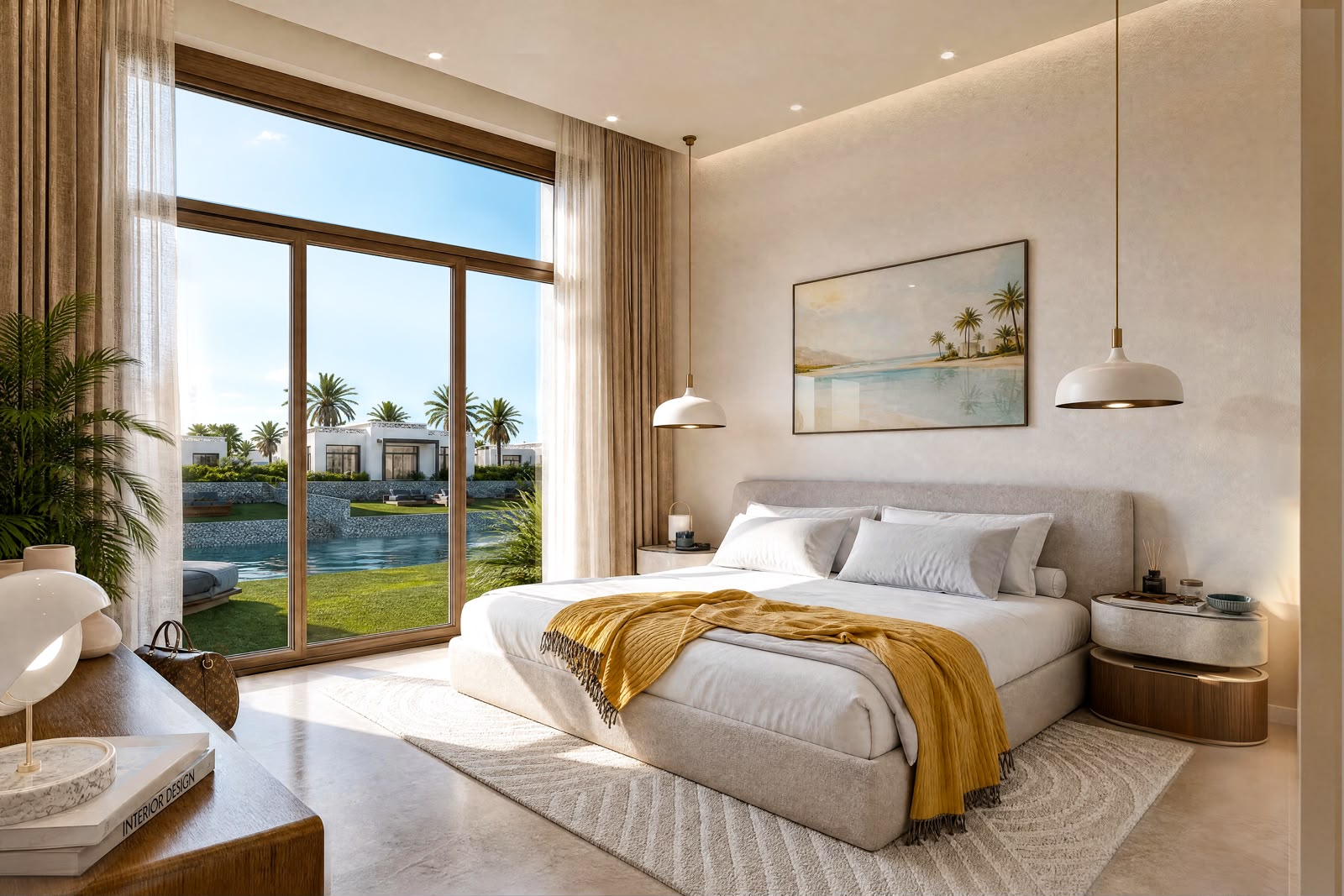
If you have been searching for a beachfront home or an income-generating holiday asset outside India, here is the short answer: yes, Indian citizens can legally buy property in Salalah Oman on a full freehold basis. Under Royal Decree 12/2006, foreign nationals, including Indians, may own 100% freehold real estate inside approved Integrated Tourism Complexes (ITCs). In Salalah, that means Hawana Salalah, the only major ITC in the Dhofar region and one of the most affordable freehold entry points in the Gulf.
This 2026 guide explains exactly how NRIs and resident Indians can buy property in Salalah Oman, what it costs in rupees, how the RBI remittance rules work, and how a purchase can unlock Oman's renewable 10-year investor residency.
Can Indian Citizens Legally Buy Property in Salalah? ITC Freehold Rules Explained
Oman restricts foreign ownership to designated Integrated Tourism Complexes. Inside an ITC, foreigners receive the same permanent freehold title as Omani nationals, covering both the property and the land beneath it. This is a genuine freehold, not a lease. Omani law distinguishes freehold from usufruct (long-term usage rights), and ITC purchases give Indian buyers the stronger of the two: full freehold ownership.
Key points for Indian buyers in 2026:
- No residency or visa required to buy. You can purchase during a tourist visit to Oman.
- Title is inheritable. Ownership passes to your family, with structures of up to 99 years on some products.
- All major property types are open. Apartments, villas, townhouses and chalets inside ITCs can all be foreign-owned.
- Effectively tax-free ownership. As of 2026, Oman levies no annual property tax, no capital gains tax on personal property, and no personal income tax.
Approved ITCs across Oman include Al Mouj Muscat, Muscat Bay, Jebel Sifah, AIDA at Yiti, and Hawana Salalah. Since Hawana Salalah is the only large ITC in Dhofar, Indians who want to buy property in Salalah Oman will, in practice, buy at Hawana Salalah.
Where Indians Can Buy: Hawana Salalah, Amazi Beachfront and Lubana Island
Hawana Salalah is a master-planned resort destination with marinas, lagoons, hotels and white-sand beaches on the Arabian Sea. For Indian buyers browsing Hawana Salalah property for sale in 2026, the current releases are:
- Amazi. Beachfront homes positioned directly on the coastline, designed for both personal use and short-let rental income.
- Lubana Island. Waterfront homes in an island-style setting within the Hawana Salalah masterplan.
Chalets at Hawana Salalah start from OMR 98,000, making Salalah one of the lowest-cost freehold entry points for Indians anywhere in the Gulf. You can explore current villas for sale in Salalah at Hawana Salalah or compare with Muscat-area options such as Raya at Jebel Sifah, where releases like Olive Farms and Solaris offer a different lifestyle near the capital.
Why Salalah Beats Dubai on Entry Cost
- Chalets from roughly OMR 98,000 versus typical AED 1 million-plus freehold entry tickets in Dubai.
- No annual property tax or capital gains tax regime in Oman.
- A clear residency pathway at OMR 200,000 (about USD 520,000) for the renewable 10-year Golden Residency.
- Lower competition and a market repeatedly described by industry guides as low-price with strong appreciation potential compared with Muscat.
Prices in Rupees, LRS Remittance and the Step-by-Step Buying Process for NRIs
Salalah Property Prices in Indian Rupees
At exchange rates of roughly Rs 215 to Rs 220 per Omani rial in 2026, indicative conversions look like this:
- Hawana Salalah chalets from OMR 98,000: approximately Rs 2.1 to 2.2 crore.
- Broader Oman ITC entry points: starting around Rs 75 lakh in some projects nationwide.
- Golden visa threshold of OMR 200,000: roughly Rs 4.3 to 4.4 crore.
For context, Rs 2.1 crore in Salalah buys a freehold beachfront chalet in a managed resort. In most Indian metros, the same budget buys a mid-range apartment far from the sea.
How Indians Pay: The RBI LRS Route
Under the RBI's Liberalised Remittance Scheme, each Indian resident can remit up to USD 250,000 per financial year for overseas property purchases. Practical implications:
- A single buyer can cover an entry-level Hawana Salalah chalet within one or two financial years.
- Family members can combine LRS limits to fund larger villas or golden visa-level purchases.
- NRIs remitting from overseas income are generally not bound by LRS caps, simplifying larger acquisitions.
Step-by-Step Buying Process
- Choose your unit at an ITC such as Hawana Salalah, ideally with a consultant who knows current releases like Amazi and Lubana Island.
- Sign the Sale and Purchase Agreement (SPA) with the developer.
- Remit funds via LRS or NRI channels according to the payment plan.
- Pay the registration fee, around 3% of the purchase price, at the Ministry of Housing.
- Receive your title deed (mulkiya), the official proof of freehold ownership.
Oman Golden Visa: Residency by Property for Indian Buyers
Oman residency by property is one of the strongest reasons Indians buy in Salalah:
- OMR 200,000 or more in property can qualify for the renewable 10-year investor residency (golden visa).
- Price alone does not approve an application; the file is still reviewed by the authorities.
- The programme is open to Indian nationals, covers the investor's family, and remains renewable as long as the investment is held.
The Oman golden visa gives Indian families a Gulf residency base without the higher price tags seen in the UAE, and Oman's large Indian diaspora makes relocation, schooling and property management notably easier. For details on ownership structures and due diligence, see our legal guide to buying property in Oman.
Khareef Season: Salalah's Built-In Rental Income Engine
From late June to early September, the Khareef monsoon transforms Salalah into a green, mist-covered landscape unlike anywhere else in Arabia. The result is a massive, predictable annual tourism surge. For Hawana Salalah owners, that means:
- A concentrated high-season window for premium short-let rates.
- Strong occupancy driven by GCC and international visitors.
- Resort-grade management within the ITC, so absentee NRI owners can earn without day-to-day involvement.
Add year-round beach tourism and Salalah's connectivity, about a 3-hour direct flight from Mumbai with seasonal links from Indian hubs, and the rental case becomes compelling. For many Indian buyers, Salalah is closer than several domestic routes.
FAQ
Can Indians buy property in Oman without living there?
Yes. Indian citizens can buy freehold property in approved ITCs like Hawana Salalah with no prior Oman residency or visa. The purchase can be completed during a tourist visit, and the title deed is fully inheritable.
How much does property in Salalah cost in Indian rupees?
Chalets at Hawana Salalah start from OMR 98,000, roughly Rs 2.1 to 2.2 crore at 2026 exchange rates. Wider Oman ITC entry points begin around Rs 75 lakh, though those are outside Salalah.
Does buying property in Salalah give residency in Oman?
Yes, above set thresholds. A property investment of OMR 200,000 or more can qualify for Oman's 10-year investor residency, which is renewable while you hold the investment.
Are there taxes on property in Oman for Indian owners?
As of 2026, Oman has no annual property tax, no capital gains tax on personal property, and no personal income tax. The main transaction cost is the registration fee of around 3% paid at the Ministry of Housing.
Is Salalah better than Dubai for Indian property investors?
It depends on your goals, but Salalah offers a much lower freehold entry point, a tax-free holding environment, a clear golden visa pathway, and a unique Khareef-driven rental season, making it attractive for value-focused NRI investors.
Ready to Explore Hawana Salalah?
Whether you want a beachfront chalet at Amazi, a waterfront home on Lubana Island, or a golden visa-qualifying portfolio, our team guides Indian buyers through every step, from unit selection and LRS remittance planning to title registration. Contact an Irfan Investment Group consultant today for current availability, payment plans and a personalised rupee-based cost breakdown.
Browse live listings
Every unit below is priced from live developer inventory and updated as stock moves.